Kostya feature
#History #Thriller #Drama
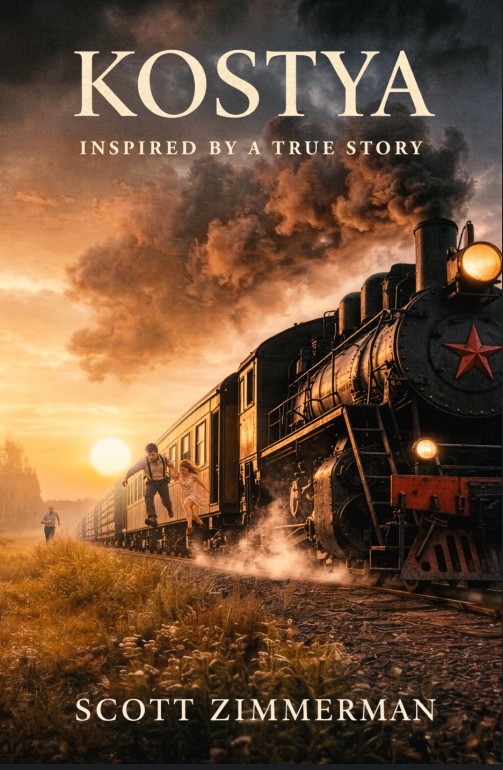
A young Ukrainian endures years of genocide, Nazi forced labor, Allied bombings, and Stalin's enslavement. To escape the secret police, he must outwit a Soviet general and choose between the only home he's ever wanted and a promise he cannot break. Inspired by a true story.
Awards
Approved
Summary
1 Reviews |
105 pages |
7 months ago
|
Draft 2
KOSTYA is an epic historical thriller inspired by a true story, following a Ukrainian boy who barely survives Stalin's genocide in Ukraine, then forced labor in German mines.
After years of Nazi enslavement, Kostya believes liberation has come—only to be seized again by Stalin's regime and forced to work in a logging camp in the Urals.
He forms an unlikely bond with Ivan, a broken older prisoner who once betrayed another man to survive. Kostya's integrity slowly redeems Ivan, and together they attempt to escape. Where other war victims learn to lie, steal, or harden themselves, Kostya clings—almost stubbornly—to moral clarity, even when it costs him safety, love, and freedom.
The escape twists at a remote farm when Kostya falls in love for the first time.
A relentless manhunt by the MVD secret police ensues. The fugitives race through Moscow, trains, swamps, bombed-out cities, and checkpoints as the Soviet state closes in.
In the climax, Kostya is cornered in Mariupol—but instead of running, he turns and confronts his pursuer in public. Armed not with violence but with knowledge of a high-level cover-up, Kostya forces the general to back down, calculating the risk of exposure.
KOSTYA is not a war movie about heroics on the battlefield—it is about moral courage under totalitarian pressure. It explores how power operates through secrecy, how survival corrodes the soul, and how truth—spoken at the right moment—can still frighten even the most absolute authority. Comparable in scope and seriousness to The Pianist and The Fugitive, the film offers something rare: a story where integrity itself becomes the weapon that gets a man home.
After years of Nazi enslavement, Kostya believes liberation has come—only to be seized again by Stalin's regime and forced to work in a logging camp in the Urals.
He forms an unlikely bond with Ivan, a broken older prisoner who once betrayed another man to survive. Kostya's integrity slowly redeems Ivan, and together they attempt to escape. Where other war victims learn to lie, steal, or harden themselves, Kostya clings—almost stubbornly—to moral clarity, even when it costs him safety, love, and freedom.
The escape twists at a remote farm when Kostya falls in love for the first time.
A relentless manhunt by the MVD secret police ensues. The fugitives race through Moscow, trains, swamps, bombed-out cities, and checkpoints as the Soviet state closes in.
In the climax, Kostya is cornered in Mariupol—but instead of running, he turns and confronts his pursuer in public. Armed not with violence but with knowledge of a high-level cover-up, Kostya forces the general to back down, calculating the risk of exposure.
KOSTYA is not a war movie about heroics on the battlefield—it is about moral courage under totalitarian pressure. It explores how power operates through secrecy, how survival corrodes the soul, and how truth—spoken at the right moment—can still frighten even the most absolute authority. Comparable in scope and seriousness to The Pianist and The Fugitive, the film offers something rare: a story where integrity itself becomes the weapon that gets a man home.
Industry Reviews
The screenplay shows a great grasp of historical scope and visual storytelling. Scenes like the horrifying B-17 bombing of the bridge, Kostya drinking desperately from a cow trough, and the imagery of a German Shepherd barking inches really gives the reader a cinematic visual of the film throughout. The core strenght of the script is how it handles the psychological concept of integrity under oppressive regimes. Kostya's family rule—to eat slowly...
Top Reviewer